

How to Communicate Feelings in a Relationship (Without Starting a Fight)
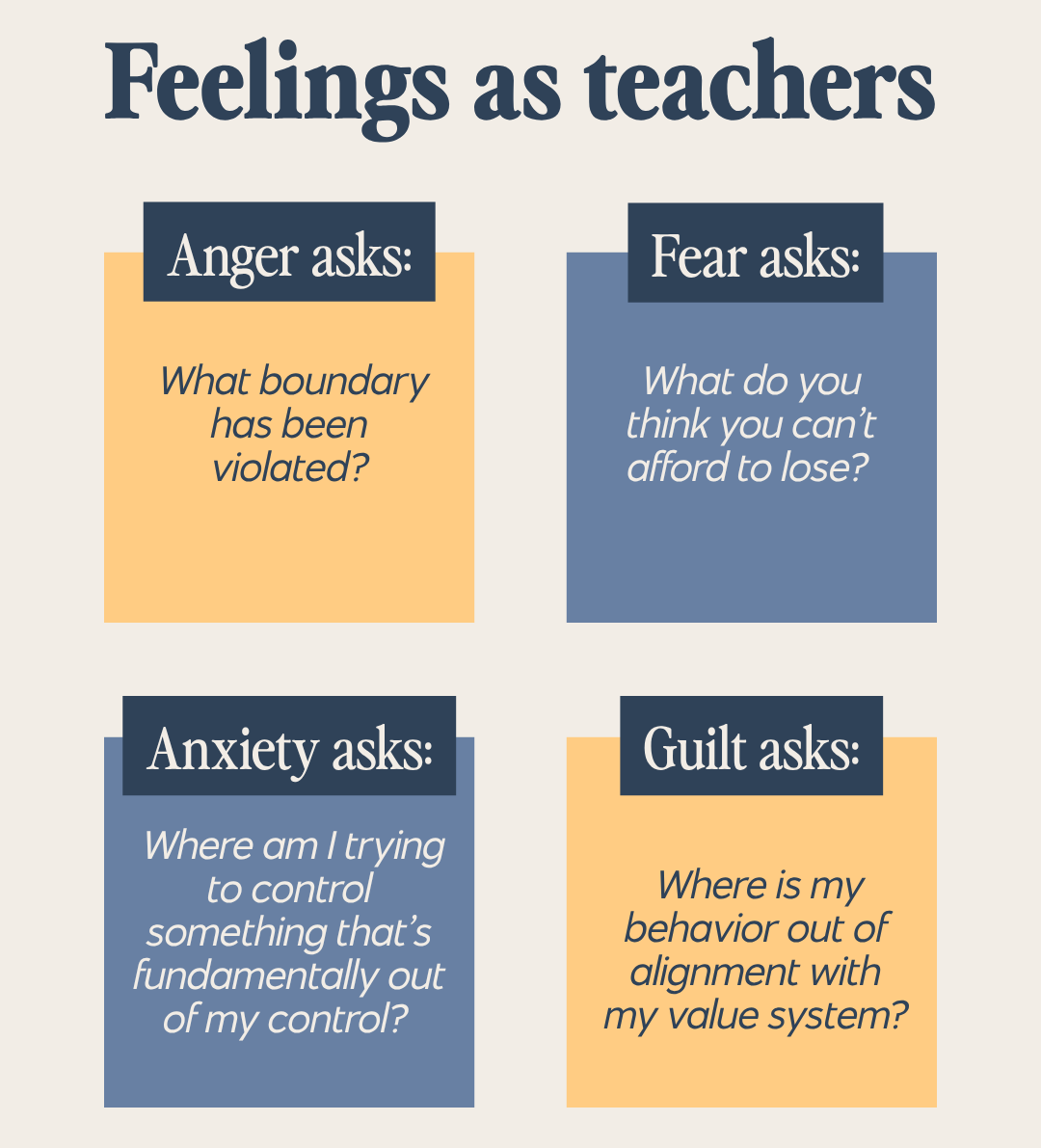
Our feelings have an education for us. Every single one has a unique lesson plan designed to teach us something new. But too often we’re so stuck in our story about our feelings that we never get to the feelings themselves or the benefit of their education.
Like the time I found out my boyfriend (now husband) was vaping again (that fucking vape, I swear to god) and I came after him on my high horse about his health with the accusation “I feel like you don’t even CARE!” Of course, he got defensive since I’d attacked (“I DO care!”) and I retaliated (“Obviously you don’t because if you cared you’d quit!”), and we spent the rest of the road trip on which I’d picked that fight snarking at each other.
We got nowhere because I wasn’t sharing my feelings. I was too busy weaponizing my story to receive the curriculum my sadness, anger, and fear had for me.
This happens constantly in intimate relationships. And if we’re not clear on the difference between our feelings and our commentary about our feelings, we’ll have the same old fight and wonder why nothing ever gets resolved.
“I Feel Like I’m Being Taken Advantage Of” Is Not a Feeling
Here’s a recent client example: let’s say your live-in boyfriend is between jobs and you’re starting to get resentful as he seems to be taking his sweet-ass time securing employment. You’ve been feeling agitated about it for a few weeks, but today some switch in you flipped and you really started stewing on it. “It shouldn’t be taking this long, is the problem his ambition or is it his resumé or maybe he’s resting on his laurels? How come I’m the only one working?”
Your anxiety and frustration are building, and as you’re mid-stew, “I feel like he’s taking advantage of me” rolls across your awareness. It is so compelling, so seductive in its drama, that you pause in wonderment.
“EUREKA!” your survival system yells. “Now that’s a feeling!” And you stop looking, satisfied that you’ve identified how you feel.
Only that isn’t a feeling. It’s a thought masquerading as one. And it’s one of the most common relationship communication mistakes people make.
The Difference Between Feelings and Thoughts in Relationships
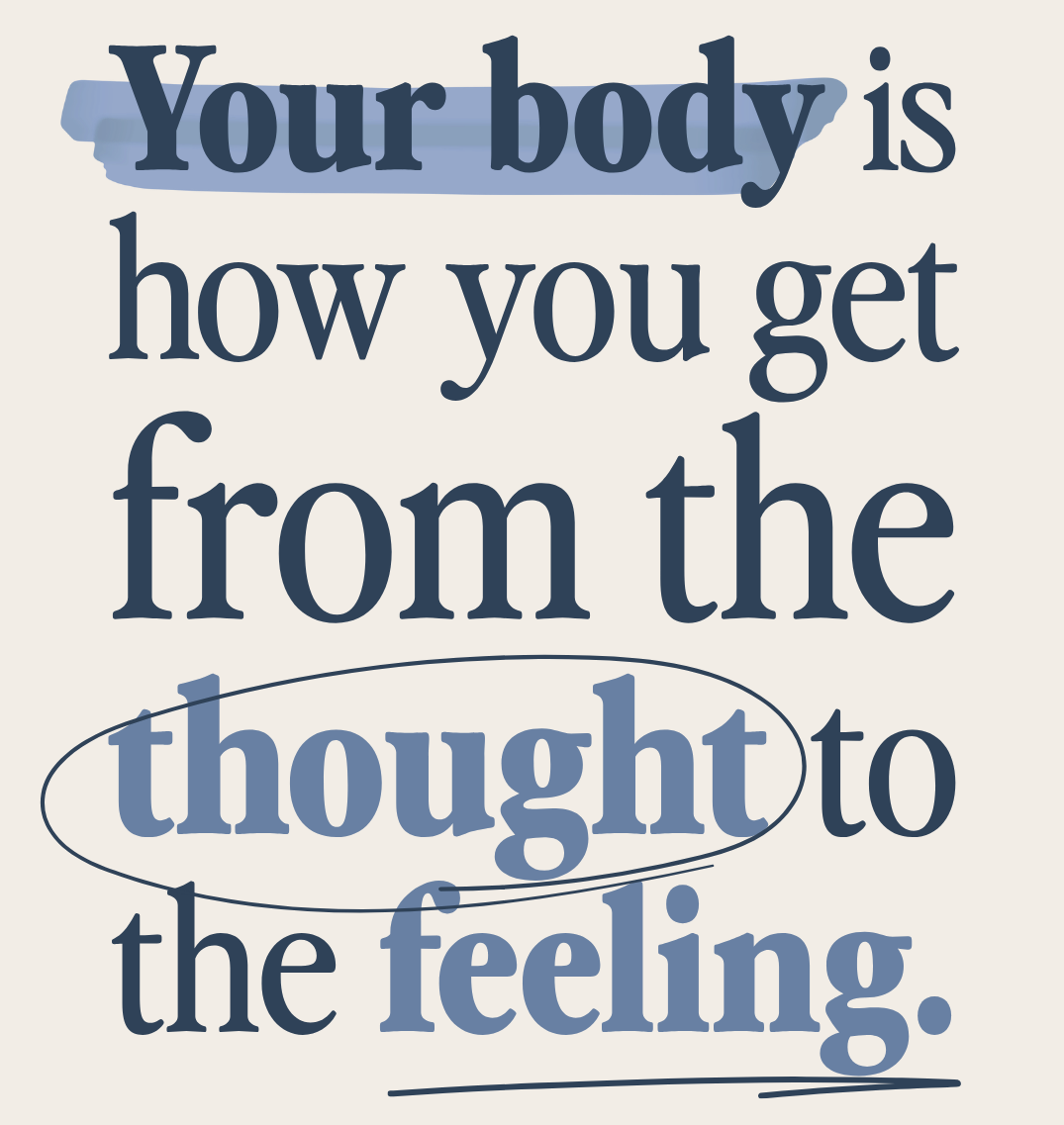
Thoughts give you somewhere to stay. Feelings give you somewhere to go.
We reflexively take refuge in our thoughts because, while feelings are generative and healing, they are also destabilizing. They require movement, curiosity, and intelligent surrender.
Thoughts, however, speak our language. Our thoughts about our feelings are usually critical, reductive, and repetitive, but they feel like home because they’re familiar. Thoughts let us stay clinging to a singular perspective, the comfortable righteousness of victimhood or offense, whereas we fear the “go” of a feeling because we don’t yet know where it will land us, or what it might cost.
So you cease your inquiry upon arriving at “I feel like I’m being taken advantage of.” It certainly feels real; it triggers the somatic tags of a true emotion, racing heart, sweaty palms, urgent energy, so you conclude it must be the truth.
The more you chew on this “feeling,” the angrier you feel, until you decide it’s time to “communicate.” So you waltz into the room where he’s typing away and announce, “I feel like I’m being taken advantage of!”
You might as well lob a bomb into the ecosystem of your relationship, for predictably you’ll spend the next 48 hours fighting about the truth of that statement. You argue for why he is taking advantage of you; he argues for why he isn’t, nobody hears anyone because there’s no vulnerability in the room, and nobody gets close to revealing, let alone learning from, a true feeling.
Truth be told, you don’t even want to be right that you’re being taken advantage of. You’d much prefer to learn he’s struggling with anxious paralysis or indecision or even bad luck. But when we’re busy advocating for our thoughts, we have no room to learn anything new; we can only defend what we think we already know.
This is the turbulence we create: we nail our partner to the wall with our ego’s interpretation, but in doing so, we miss the direction our true feelings were trying to guide us toward.
How to Get to the Feeling Underneath the Story
Let’s go back 48 hours ago to when you were stewing. Take some deep breaths, and take your focus off your mental narrative, withdraw your attention from the noise in your head about how he should have a job by now, how much pressure it puts on you, and how over it you are. Draw that attention down toward your body.
Maybe you notice your shallow breathing, your furrowed brow, and the feeling of internal pressure, like you could explode. Maybe you notice the tension in your mouth and jaw like a withheld snarl. Maybe it starts to register that what you’re feeling is anger. And maybe, as you breathe deeply to make room for the feeling in your body, your anger reconnects you to your self-worth. To your wants and your needs. To your own boundaries and limits.
What Anger Is Actually Trying to Tell You in a Relationship
Anger lets us know when a boundary is crossed. It re-orients us to our own self-worth and the voice that advocates for it. When we feel it, our work is to consider what boundaries need to be communicated or reinforced in order to take care of ourselves.
Healthy anger isn’t an invitation to indict someone else’s behavior. Anger’s a reminder to stand for ourselves, communicating what we will and won’t accept.
And maybe in that moment you go to your partner saying: “Hey, the more I think about your job search, the more I realize I’m feeling angry and resentful…and a little scared. I’m not okay being the only one with an income in this house, and I’m scared this is going to drag on indefinitely. To take care of myself, and protect our relationship from the resentment I’m feeling, I need to get clear on the plan. Can you walk me through your process and exactly what jobs you’re applying for right now?
Maybe you add: “I love you, and I want this to work, but I need to be honest about my limit: if you aren’t employed by the summer, we’re going to have to talk about living separately. I need to know that I’m in a partnership that feels balanced, and right now, this doesn’t feel sustainable for me.”
What It Sounds Like to Lead With Vulnerability in Relationship Communication
When we tune into our feelings as they show up in our body, rather than our mental commentary on our feelings, we become available to learn something new about ourselves and our situation. We bring vulnerability to the communication, which changes how our partner engages with us. But in our thoughts, we’re not open to learning anything new. We just want to be right about what we think.
If years ago on that road trip I’d had the skill and courage to touch what I really felt, I could have led with it. I might have said: “Babe, I’m scared…I’m scared about your health, I’m scared about your self-control, and I’m really scared that this isn’t as important to you as it is to me.”
I would’ve felt immensely vulnerable to lead with my fear and speak so honestly. It would mean having to sit with the intensity of my fear, rather than using it to attack my partner. It would mean having to feel the uncertainty of collaborative problem solving. And it would mean being accountable for my own feelings, rather than blaming him for how I felt.
If I’d been able to share my feelings, I happen to know I have a partner who would have met me in my fear and sadness with compassion. Rather than having to defend himself, he would have asked questions to help him understand my fear more deeply, and he would have tried to navigate our struggle together.
A Simple Roadmap for Expressing Emotions Without Fighting
The point in these examples isn’t about the outcome. It’s not about getting my partner to stop vaping, or getting yours to get a job. It’s about staying connected to ourselves in the impact of relational turbulence, and letting the wisdom of our emotional curriculum guide us.
It’s a discipline to dismantle thoughts in search of the feelings under them without getting snagged by their drama. This practice demands our humility and curiosity, our willingness to look beyond the simple interpretation our egos dropped in our lap for the true feelings beneath it. But that’s where real intimacy lives.
The roadmap is simple, though not easy:
Breathe.
Withdraw your attention from the narrative in your head.
Locate the physical sensation in your body.
Name the raw emotion driving the commentary and sensation.
Tune into the energy of that raw emotion.
Lead with that vulnerability instead of your ‘case.’
When we stop being a prosecutor of our partner’s flaws and start being a student of our own emotional curriculum, we stop fighting the same old battles. We gain the clarity to either solve the problem together, or the self-worth to decide we can no longer stay. Either way, your choice is based on your true feelings. Not the noise in your head.
-Mollie Birney
