

Patience Isn’t Penance
Why enduring the wrong things isn’t virtuous, and how to recognize what deserves your time, energy, and care
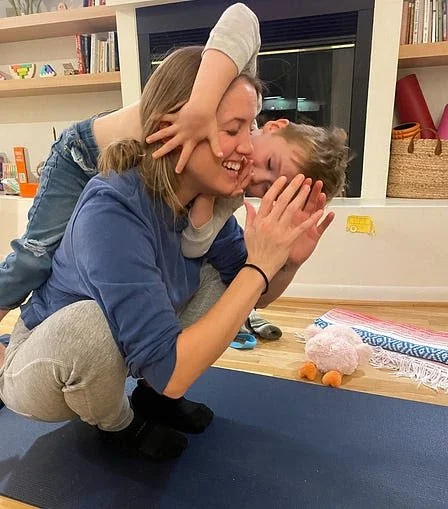
Winter is a waiting game.
We wait for schedules to ease, for the kids to go back to school, for family visits to end, for things to feel lighter again. This time of year quietly glorifies endurance, patience as a badge of honor, and perseverance as proof of virtue.
But here’s the truth, many of us are bumping into:
More patience isn’t always the answer.
Sometimes it’s the problem.
When “Being Patient” Becomes Emotional Self-Abandonment
“Just four more days and my in-laws fly home,” one client said, barely holding it together.
“She’s still talking to her ex, but I can wait,” said another.
“I just need to be patient with him,” a colleague wrote. “He’s being a jerk, but jerks deserve compassion…right?”
Yes — compassion matters.
But when patience requires you to suppress, sanitize, or override your real feelings, something important is being skipped.
In coaching and therapy work, I see this pattern constantly:
people defaulting to patience when what they’re actually experiencing is discomfort, anger, grief, or a boundary being crossed.
Patience can be a virtue.
And it can also be a red flag that your tolerance for emotional labor is way too high.
Why We’re Conditioned to Choose Patience Over Truth
The reflex to “just be more patient” isn’t neutral.
It’s often rooted in shame.
We’re taught — explicitly and implicitly — that our emotions are inconvenient, dramatic, or unreliable. So instead of listening to them, we assign ourselves more patience as a way to manage the situation alone.
That’s not maturity.
That’s invisible emotional labor.
It quietly places responsibility for a shared dynamic onto one person — usually the one who is already doing the most emotional work.
Patience Isn’t Penance
Patience is not a moral tax you pay to stay in relationship.
It’s not a virtue test.
And it’s not proof that you’re evolved.
Patience isn’t penance.
It’s not something you owe because you’re kind, insightful, or self-aware. And it’s definitely not a commandment leftover from puritanical ideas about suffering being noble.
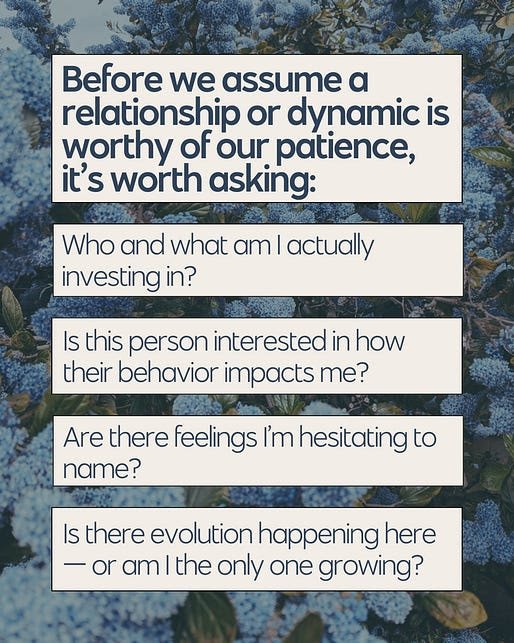
What Real Patience Actually Is
True patience is a creative act.
It’s an investment in something alive and capable of growth — not a strategy for surviving stagnation.
Real patience requires:
Discernment
Emotional honesty
A clear understanding of what (and who) you’re nurturing
Winter teaches this beautifully.
On the surface, nothing seems to be happening. But underground, roots are strengthening, nutrients are being recycled, and the ecosystem is reorganizing itself for spring.
Nature doesn’t rush — but it also doesn’t keep feeding what’s dead.
Less Endurance, More Discernment
Some of us don’t need more patience.
We need:
A little less endurance
A little more honest anger
A little less waiting to be chosen
A lot more clarity about our boundaries
Winter asks us to slow down — not to silence ourselves.
There is a time to rest.
A time to nurture.
And a time to stop tolerating what is quietly draining you.
A Question for This Season
As we move through winter, consider this:
What deserves your patience right now — and what doesn’t?
What is quietly strengthening beneath the surface of your life?
And what are you finally done carrying?
If this reflection stirred something, you’re not alone.
Feel free to leave a comment — I’d love to hear what’s shifting underground for you.
— Mollie
Ready to Go Deeper?
If this resonated, you may appreciate Get Unstuck— a self-led coaching experience designed to help you:
Untangle mental noise
Build discernment around your thoughts and emotions
Create more internal ease and self-trust
It’s a powerful winter practice for anyone craving clarity, emotional relief, and a more peaceful relationship with their mind.
About Mollie
Hi, I’m Mollie — a Clinical Coach, former therapist, and devoted explorer of what it means to get free from internal noise. This space is for the messy, contradictory, brilliant parts of being human.
I don’t write from a pedestal — but from the desk next to yours, in this strange classroom we’ve landed in together.
