

How to Repair After a Fight With Your Partner
Practical relationship repair tools for conflict, reconnection, and embodying “same team” energy
I love working with couples.
I don’t brand myself as a couples coach, but about half of my sessions are spent helping partners learn how to fight fairly, give each other the benefit of the doubt, and find their way back to each other in the midst of conflict.
The healthiest couples understand something most people miss:
as great as sex can be, some of the deepest intimacy lives on the other side of a good fight.
And no, I’m not coaching from some conflict-free pedestal.
My own marriage provides plenty of continuing education. The same patterns I help clients untangle, assumptions, mixed signals, and old sensitivities- also show up in my own house.
Which is how, on a totally ordinary Tuesday night, we found ourselves in what is now known as The Lasagna Saga.
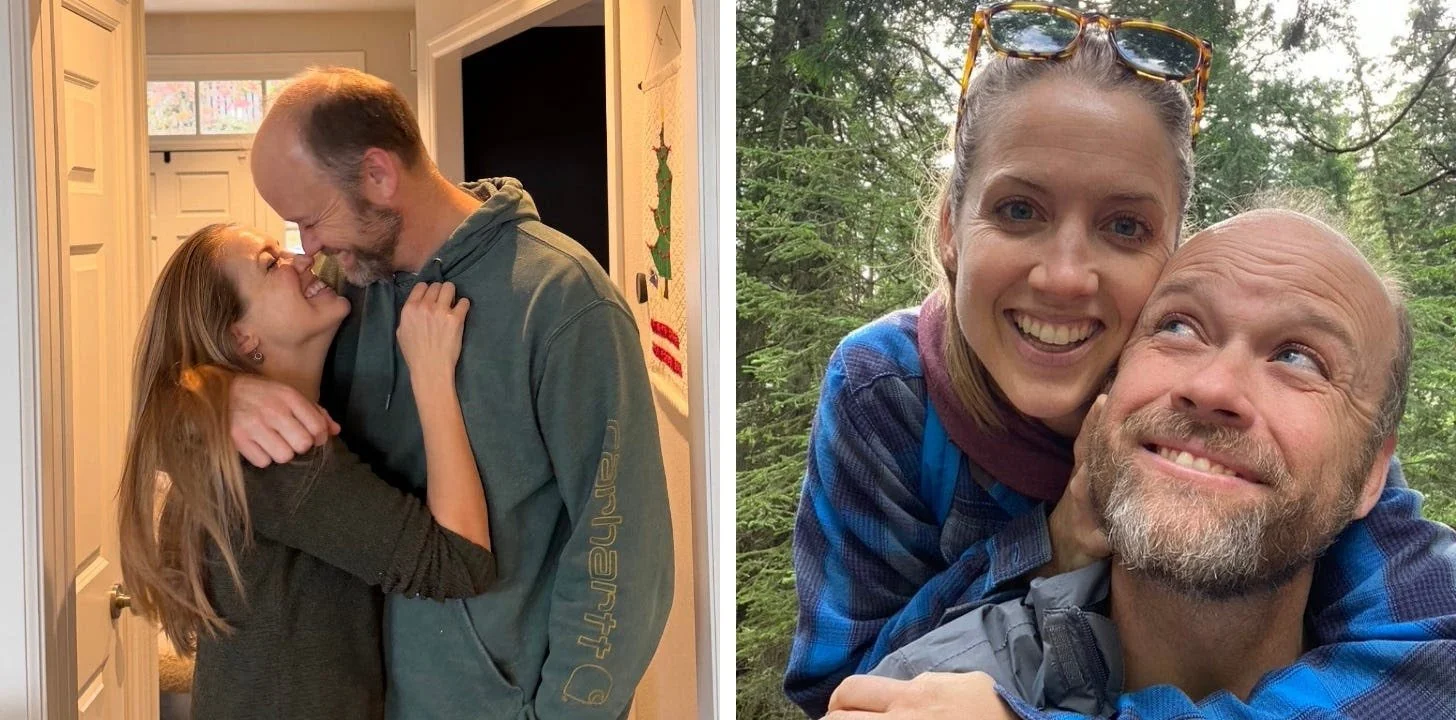
The Lasagna Saga (A Very Real Fight)
Let me set the scene.
My husband is making two lasagnas from scratch, one with meat (for him and our kid), and one vegetarian (for me). He loves to cook and does most of the meal prep in our house. I, meanwhile, have mastered only the toaster oven.
He’s in a flow state: multiple pots bubbling, stations organized, Bob Dylan playing in the background.
Our differing food preferences already make dinner a logistical puzzle, and tonight is no exception.
I almost always want more vegetables than he assumes I want. So, in an effort to be helpful, and feeling very proud of myself, I stroll into the kitchen and announce:
“I’ll sauté some extra carrots for my lasagna!”
I am helping.
I am proactive.
I am a gift.
Then I see him freeze.
“What?” I ask.
“Well… I already chopped the carrots and just added them to the pan,” he says, sounding irritated.
Clearly, he doesn’t understand how helpful I’m being.
“That’s fine,” I say. “I’ll just chop some more!”
I grab carrots from the fridge and start looking for a knife.
“Honey…” His voice sharpens.
“What’s going on? Am I doing something wrong?” I ask, already chopping.
“This is a finely tuned process,” he says. “You can’t just jump in and ruin it.”
“Ruin it??” I snap. “I’m adding two carrots.”
“Well I’m juggling two recipes to make you your own vegetarian lasagna, and now you’re telling me it’s not good enough.”
“Woah — is that what I’m telling you?” I yell. “I thought I was chopping carrots, not insulting you!”
“And you do this every time I cook for you!” he snaps.
“I’m not bossing you — I’m taking care of myself!”
“Taking care of yourself? As if me making you your own lasagna isn’t taking care of you?!”
“Oh my god,” I bark back. “If feeding me is such a burden, please stop doing it!”
“SAME TEAM!” he shouts.
We both freeze.
He takes a breath.
A moment later, so do I.
“Same team,” I echo, quieter now.
Why Repair After Conflict Matters More Than Avoiding It
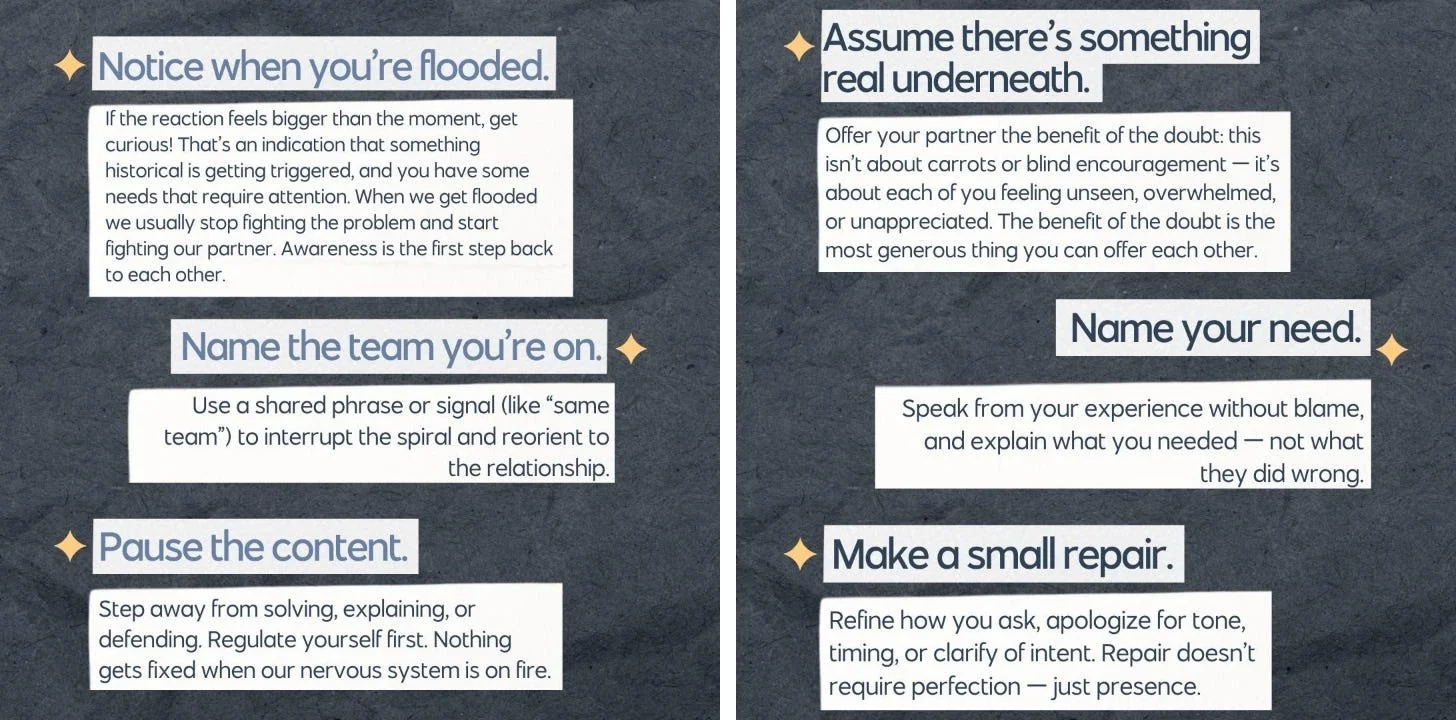
“Same team” is our flag on the play.
It’s what we say when one of us realizes we’ve stopped working on the problem and started coming after each other. With teeth.
When we’re activated, we’re no longer hearing what our partner is actually saying, we’re hearing what we’re afraid they’re saying.
We forget who we married.
In my right mind, I know I married someone who:
loves me deeply
wants me to have as many carrots as I want
genuinely wants to feel appreciated
is not out to get me
And when he’s in his right mind, he knows he married someone who:
is grateful to be cooked for
would never want to diminish him
is not criticizing his effort
This is what giving your partner the benefit of the doubt looks like, but it’s only available when your nervous system isn’t hijacked by survival mode.
When we feel unseen, unappreciated, or attacked, this wisdom evaporates.
Suddenly, I’m fighting a micromanaging anti-vegetarian fascist, and he’s fighting an ungrateful beatnik.
So “same team” becomes an invitation to pause, to reorient to the relationship instead of the content of the fight, and to remember who the real opponent is.
What Healthy Repair Sounds Like
A few minutes later, my husband says:
“Baby, I can tell I’ve got some old feelings here, and I can’t think clearly. If you cut the carrots smaller, I’ll cook them, and we can talk about this later. I need a minute.”
“Okay,” I say. “I’m here. I’m sorry I was a dick.”
The heat passes, but the emotional charge lingers.
After dinner (which was genuinely incredible), he comes to me while I’m doing dishes.
“I’m sorry I overreacted. I think I needed acknowledgment for what I was already doing before requests got added. When I have a plan, and it changes mid-stream, I get overwhelmed.”
That mattered.
I respond:
“Totally. I didn’t mean to mess with your rhythm. You were juggling two dishes — that’s a lot. It wasn’t a critique of your cooking. I just wanted more fiber. I’m sorry I came in hot.”
He laughs — soft, relieved.
Just like that, we’re back in step.
Conflict Isn’t the Problem, Disconnection Is
If this sounds suspiciously polished, let me be clear:
We’ve been together nearly two decades. We earned this ease the hard way, through years of screwing it up, repairing, learning each other’s sensitivities, and recommitting to the process.
We didn’t find “same team” by avoiding conflict.
We found it by engaging honestly and learning how to repair after a fight.
Conflict isn’t the problem.
Forgetting that you love each other in the middle of it is.
“Same team” is how we remember.
Reflection Questions:
Where do you and your people lose sight of being on the same team?
And if you imagine the next conflict, not the perfect version of you, but the real one, what’s one simple cue that could help you come back to each other a little faster?
None of us are meant to figure this out alone, and repair is how love actually grows.
— Mollie
