

How Healthy Couples Repair After Conflict
Conflict Is Not a Relationship Failure, It’s an Invitation
Here’s the truth about long-term partnership:
You can love someone deeply and still get tangled in moments of friction, overwhelm, or misunderstanding.
My husband and I have been married for eight years. We have a kid, a geriatric cat, a leak in the garage, and a living room floor that is 90% Legos and 10% regrets. We’re wildly in love — AND running a household together means conflict is inevitable.
The goal isn’t to avoid conflict.
The goal is learning how to come back to each other.
Healthy relationships aren’t defined by the absence of fights — they’re defined by the presence of repair.
Let me tell you about a recent moment that reminded me of this.
A Real Example: The Grocery Store Incident
Our kid is home sick. Not truly sick — just sick enough to demand constant snacks and attention.
I’ve just finished five back-to-back coaching sessions. My husband has spent five uninterrupted hours parenting. We are both cooked.
When I remember we need groceries for dinner, I grab my keys and call out, “I’m running to the store!” And I’m out the door.
When I get home, he’s… grumpy. Not angry. But definitely hardcore grump-a-lump, as we lovingly call it.
Before I can put the groceries down, he says:
“Dude, I’ve been parenting all day while you got to see clients and feel like a grown-up, and the minute you’re free, you don’t check in — you just run out the door?”
There’s an edge in his voice. My nervous system lights up.
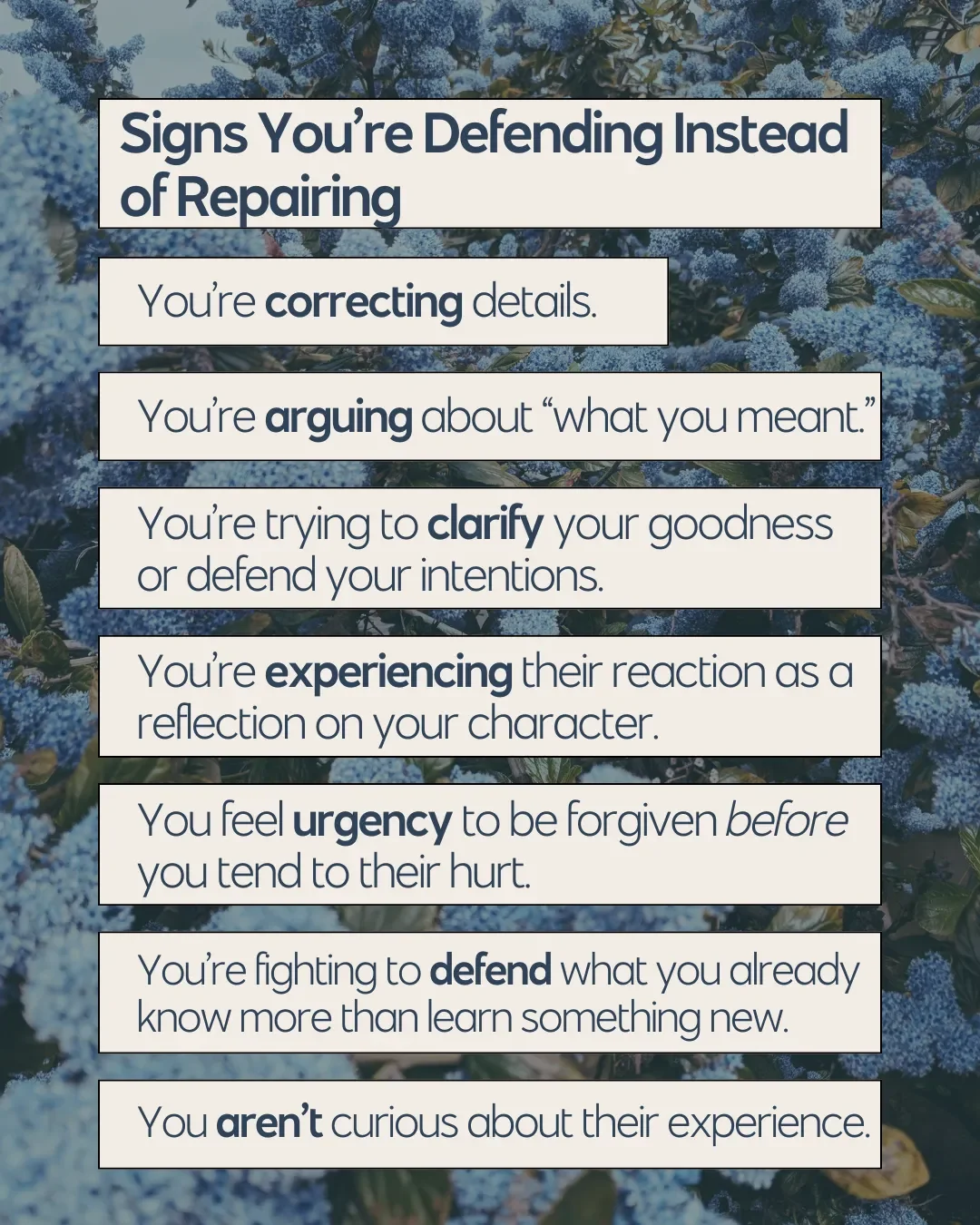
My inner defense attorney springs into action.
I want to explain my good intentions.
I want to prove I wasn’t being selfish or careless.
I want to correct the record.
But defending myself would make things worse — because it doesn’t tend to the actual injury: his hurt.
So I take a deep, unclenching breath. I remind myself:
We are on the same team. I didn’t marry an asshole. He didn’t either.
The Repair: Emotional Validation Over Self-Defense
Instead of explaining myself, I reflect his experience back to him:
“Ohhh… I hear you. You were doing dishes, laundry, and a hundred rounds of Uno all day. Then just when you thought I was coming to relieve you, I bailed for the store. I can see why that would feel awful. I could’ve checked in before going.”
His whole body softens.
When someone feels understood, their nervous system relaxes — and the conversation shifts from combat to connection.
He responds:
“Yeah, babe. That would’ve helped. And I know you were just trying to take care of us.”
Which frees me to say:
“Thank you for taking care of the boy and the house all day. None of this runs without you.”
We hug. We reset.
Just like that, we’ve navigated a rupture into a repair — without losing each other.
What Healthy Conflict Resolution Actually Looks Like
The real skill here is deceptively simple:
Validate your partner’s emotional experience before defending your intentions.
This doesn’t mean you’re agreeing with their interpretation.
It doesn’t mean you’re taking blame for something you didn’t do.
It doesn’t mean you’re abandoning your own truth.
It means:
✔ You’re tending to their wound.
✔ You’re acknowledging the impact, even if the intention was different.
✔ You’re choosing connection over correctness.
✔ You’re calming the nervous system so clarity can return.
When done well, mirroring someone’s experience is one of the fastest ways to de-escalate conflict.
It is love in action.
And yes — it’s wildly counterintuitive.
That’s why it works.
Why Relationship Repair Matters More Than “Perfect Communication”
Research in relational psychology and nervous system regulation shows:
All couples experience conflict
The presence of conflict does not predict relationship success
The ability to repair does
Repair builds trust in the background of a relationship. It says:
“Even when we mess up, we know how to find our way back.”
That’s intimacy.
That’s resilience.
That’s partnership.
Try This the Next Time You’re in a Fight
When things get heated, pause and ask:
What is my partner actually hurting about?
Can I reflect back what I hear before I defend myself?
Can I remember we are on the same team?
Is my nervous system activated — and can I breathe before responding?
Start with mirroring:
“What I hear you saying is…”
“I can see why that felt…”
“That makes sense because…”
Then, once the air has cleared, you can share your truth or clarify your intentions.
The Heart of It
We’re all going to fight.
That’s not the problem.
The question is:
Can you remember your connection in the middle of the storm?
Can you repair without losing each other?
Can you soften, even when it feels impossible?
That’s where real intimacy lives, not in perfection, but in the way you return to one another.

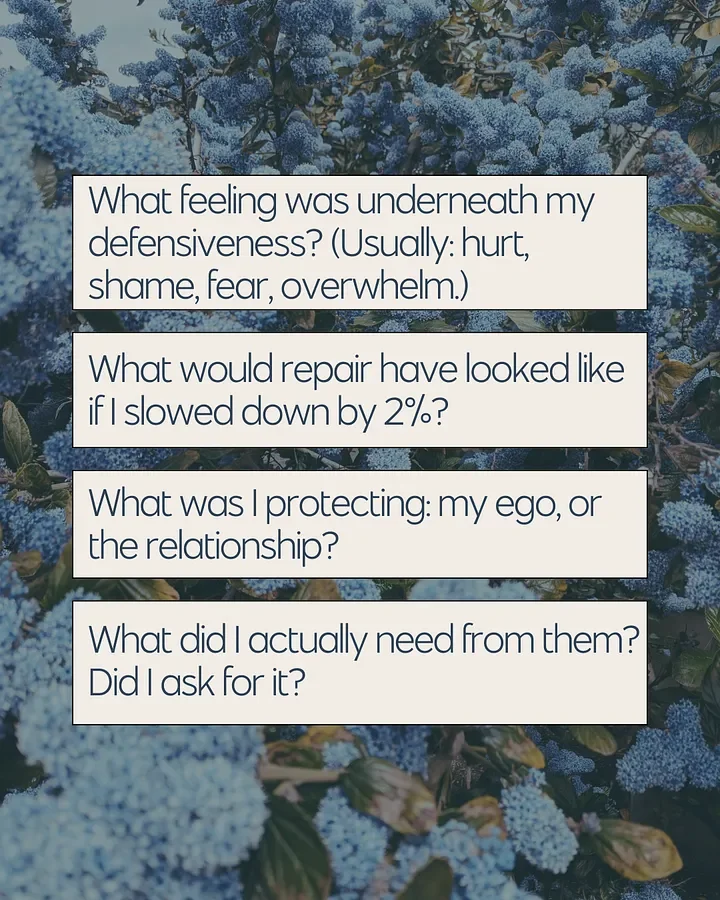
Tell Me: What Helps You Navigate Conflict With Compassion?
If you found this helpful, you might love Get Unstuck, my step-by-step, self-guided coaching experience for navigating your inner world with more clarity, ease, and emotional resilience.
It also makes a meaningful gift this time of year. Let’s learn from each other.
→ Learn More About Get Unstuck
— Mollie
